
I opened the thesaurus
and then I realized that hope
is just another word for hunger
and that—although I appease it
with the sweetest fruit
of the jungle, still,
like the cat at my ankle,
it will beg for more.
I opened the thesaurus and then I realized that hope is just another word for hunger and that—although I appease it with the sweetest fruit of the jungle, still, like the cat at my ankle, it will beg for more.
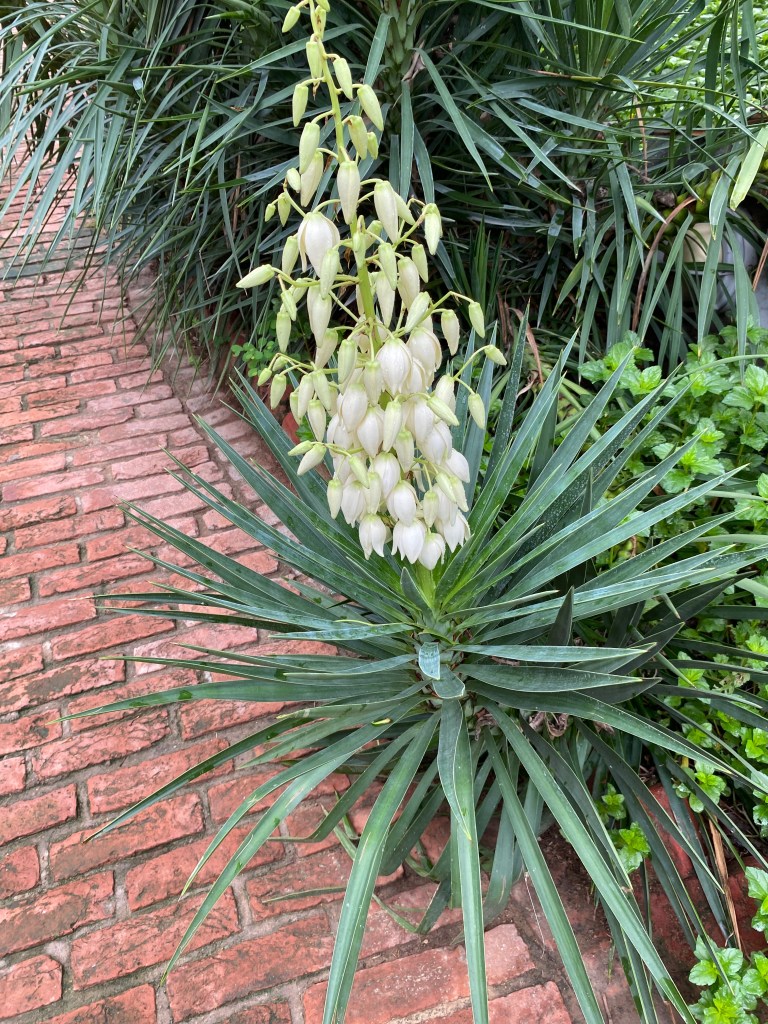
Yucca, rootbound porcupine,
stands at attention.
What are you guarding
with your green quills
straight as bayonets?
Did you ambush the juniper
with the camouflage needles?
You creep across the canyon
without tanks, refuel on sunlight.

Your fruit swells with the summer rain.

Clandestine plant,
you emerge unexpectedly
between sandstone rocks flecked with lichens
copious as the spots on a young cougar.

What secret do you oversee?
When the nocturnal moth emerges
from rosettes coated with pollen,
do you stand at ease?

No wind ruffles
your stiff leaves
as you stand sentry.
The infant wants milk, love, a lap, a lock
of your hair, the glitter from the lake,
even the moon. The child wants
a friend, a fort, time to play. The youth seeks
to divide and conquer, climb, achieve, win,
subjugate, wills to power and overpower,
even to exert the power
and influence to reject and scorn.

But then one day, whether by choice or force,
the adult releases, accepts, empowers
others.

Let my bones be a bridge, my hair
the buttresses in a nest, my dreams
wings for the creatures that fly.
Let my words be the ripples
that resonate in the pond
and then, more thinly, more
obliquely, in the air,
though I have no breath.
Aloft, they perch along the nest rim—
no longer nestlings,
nor yet fledglings.
For several weeks, their parents
have fed them, beak to beak,
swooping on blue-black wings
to siphon insects from the air, winged
insects so small I cannot see
them.

Hope, penned Emily Dickinson, is the thing
with feathers that perches in the soul.
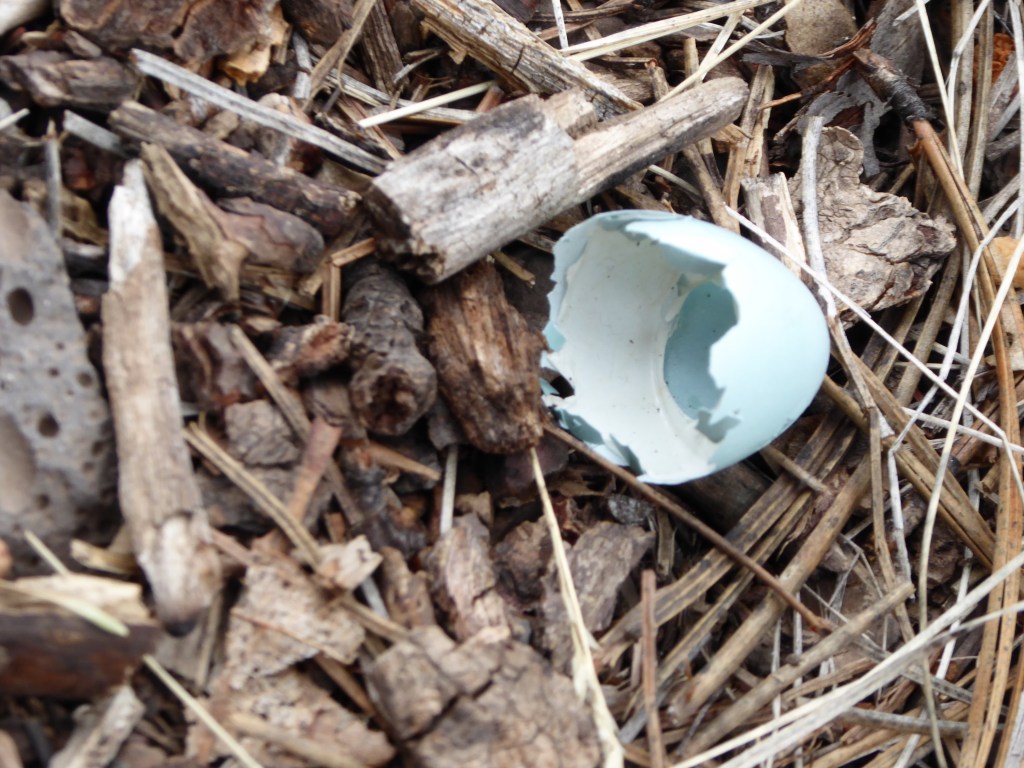
But even so, hope is also the last egg
cradled in the nest, displaced only yesterday—
though its nest mates are nearly fledged now—
and cracked open on the tiled step:

The ants made short work
of its golden yolk.
In a cult, we all hold the same beliefs
or risk expulsion.
In a community, we work
together to find a solution,
despite diverging opinions,
and always hope to reconcile
with each other
when we start
to drift apart

Whatever’s happening in the world,
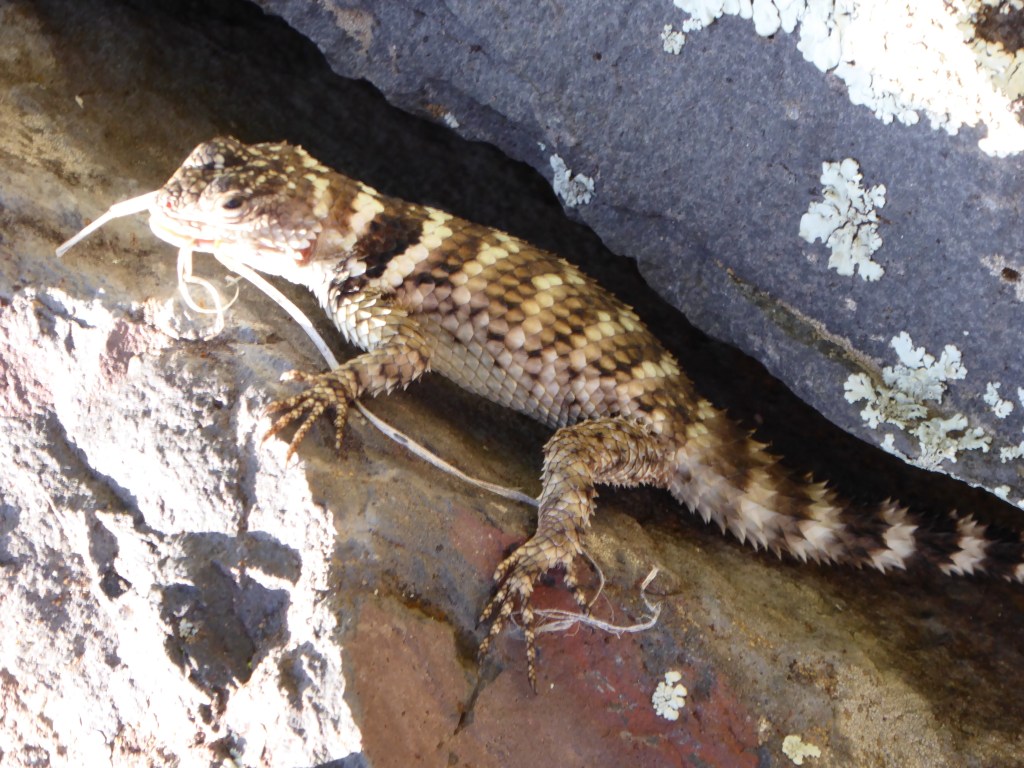
I know my yard is a community
where neither the stray cat
nor the lizard
can disentangle themselves
from their mutual obligations
and appetites, and yet,
the choreography of the dance—
between movements—
allows them to lie shoulder to shoulder
in the round belly of the earth
at last.

It’s spring and the river ice
cracks—
and whose to say—
if you could hear it—
that it’s not unlike the sound
of nest building
as the twig snaps.

I once thought love is the mightiest
word but now I think perhaps the mightiest word
is hope. Oh, we love so freely, and with abandon.
We are so prodigal with our love. But hope
is the stubborn fortitude of the bud
holding on through frost and ice.
It’s the steadfastness of tree roots
carrying nutrients to the trunk and branches
of the tree, though its bark and branches
are already alight with lightning strike
or forest fire.

Oh, I want to be a vessel for the sap.
I want to be a seed
in the sharecropper’s hand.
I want to be the jellied eggs
of the spadefoot toad
there tucked in the shaded patch
of the puddle, and waiting—
in this drought-stricken land—waiting for
thunderclap.

Or, if nothing else remains, I want to be
that faint flame—cupped
in your hands—coaxed
to life with your breath.
Little victories:
It’s the first steps
that matter most—
the bud on the twig,
not the flower,
the nearly imperceptible
shadow on the grass
before the heel lifts
off the springy soil.

See on the wall next
to the entryway door,
the small beakful
of mud and twig
that clings to the wall
like soil to a rootball—
that twig and tiny portion
of mud, not yet a nest
but still more than clay and twig,
and no longer without life.

Even when you can barely hope,
Even when your heart is hardened as a fist,
Even when you cannot breathe,
	Listen—
The flowers of the field,
The birds of the air

are breathing for you.
Even the seeds
deposited in the dark
earth of your heart
are splitting open . . .
and the birds perched in the eaves

have already deposited
a song, hidden in the egg’s
rich yolk.

It starts little by little—-a bit of windblown
dust, the rain, gentle at first, and then rainstorms.
Next comes the ice and the thaw
cracking apart the rock, oh the dust settles,
the wind blows, and alcoves form,
little hollowed chambers,
pulsing with light. Out of the rock,
shelter, like a hollowed ribcage, emerges.
Oh, you could sing in here, a lovely song,
a sad song, just choose your register.
And soon the alcove echoes
with the song of the cave swallow,
and then the song of the canyon wren,
whose appearance is as rustic as the robe
of a Franciscan friar, but whose song is as beautiful
as the sweetest song of Solomon.
And the canyon wren’s song never ceases, not even in winter.
Oh, what does the canyon wren sing? Beautiful liquid notes,
a rounded rock or pebble thrown into a pool of water
after the rainstorm, rockfall, downslope, snowmelt
rushing over red rocks in the canyon, think of chimes,
or lost loves. But what does the rock wall
of the canyon sing--
only heart-
break over rock worn down
by wind and rain.
 terimuso: Poetry by Tammy Iralu